mercredi 1 juillet 2020
Bibliografie Stalin
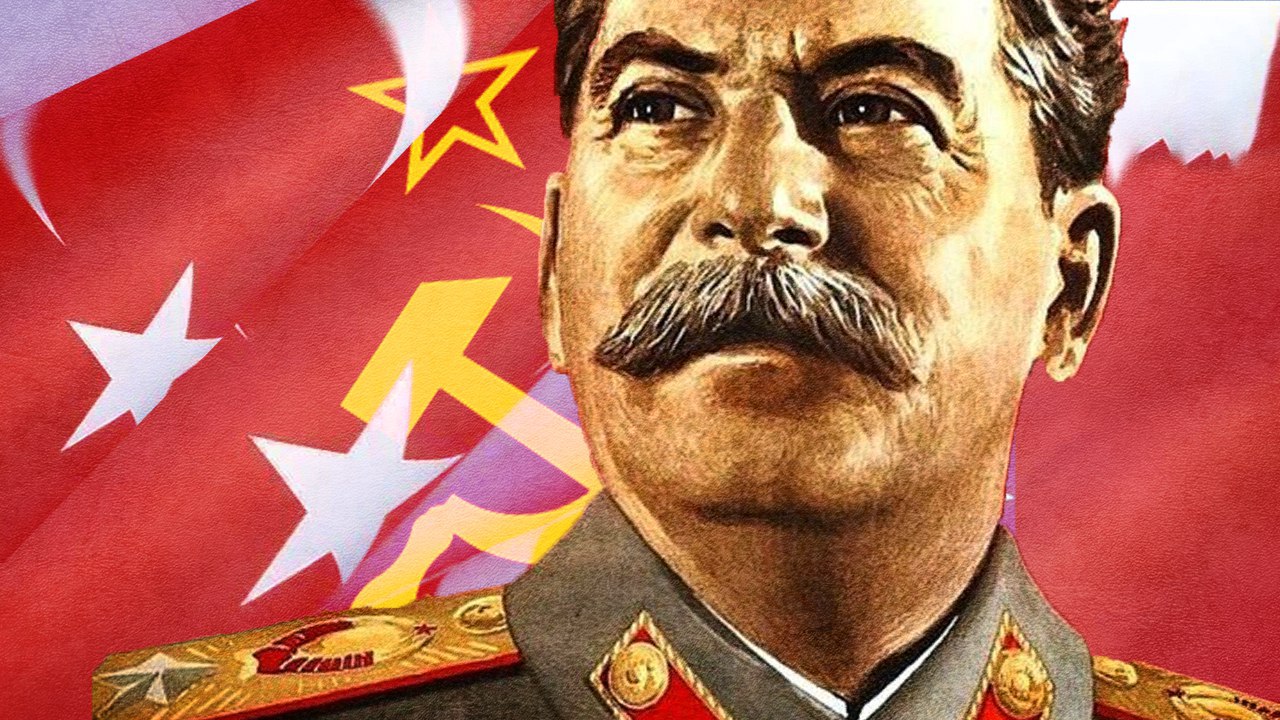
Bibliografie Stalin
Inainte de 1953
Levine, Isaac Don. (1931). Stalin. New York: Cosmopolitan Book Corporation.
Souvarine, Boris. (1939). Stalin: A Critical Survey of Bolshevism, New York: Alliance Book/Longmans Green.
Barbusse, Henri. (1935). Stalin: A New World Seen Thhrough One Man. New York: Mcmillan.
Ludwig, Emil. (1942) Stalin, New York, G.P. Putnam’s Sons
Deutscher, Isaac. (1949). Stalin: A political Biography, New York. Oxford University Press, sec. ed. 1967
Fisher, Louis. (1952). The life and death of Stalin, Harper and Bross, New York
Dupa 1953
Lewin, Isaac Don. (1956). Stalin’s Great Secret. New York: Coward-McCann.
Medvedev, Roy.(1971). Let History Judge : The Origins and Consequences of Stalinism, York, Knopf.
Ulam, Adam B. (1973). Stalin: The Man and His Era. New York.
Tucker, Robert C. (1973). Stalin as Revolutionary: 1879–1929: A Study in History and Personality.
Antonov-Ovseenko, Anton. (1981). The Time of Stalin: Portrait of a Tyranny, New York: Harper and Row
McCauley, Martin (1983). Stalin and Stalinism. Harlow England: Longman
De Jonge, Alex (1986), Stalin and the Shaping of the Soviet Union. New York: William Morrow and Co.
Tucker, Robert C. (1990). Stalin in Power: The Revolution from Above, 1928–1941. New York.
Laqueur, Walter. (1990). Stalin The Glasnost Revelations. New York : Charles Scribner’s Sons
Conquest, Robert. (1991). Stalin: Breaker of Nations. New York and London: Penguin.
Volkogonov, Dimitri (1991). Stalin: Triumph and Tragedy. Translated by Harold Shukman. London: Weidenfeld and Nicolson.
Radzinsky, Edvard (1997). Stalin: The First In-Depth Biography Based on Explosive New Documents from Russia's Secret Archive. New York.
Rappaport, Helen (1999). Joseph Stalin: A Biographical Companion. ABC-CLIO.
Boobbyer, Phillip (2000). The Stalin Era. London,Routledge.
Brackman, Roman (2001). The Secret File of Joseph Stalin: A Hidden Life. Frank Cass Publishers.
Van Ree, Erik (2002). The Political Thought of Joseph Stalin: A Study in Twentieth-Century Revolutionary Patriotism. London and New York.
McCauley, Martin (2003). Stalin and Stalinism (third ed.). Harlow and London: Pearson.
Montefiore, Simon Sebag (2003). Stalin: The Court of the Red Tsar. London: Weidenfeld & Nicolson.
Kun, Miklos (2003). Stalin: An Unknown Portrait. Budapest and New York.
Service, Robert (2004). Stalin: A Biography. London: Macmillan.
Kuromiya, Hiroaki (2005). Stalin: Profiles in Power. New York.Longman
McDermott, Kevin (2006). Stalin: Revolutionary in an Era of War. Basingstoke and New York: Palgrave Macmillan.
Montefiore, Simon Sebag (2007). Young Stalin. Weidenfeld & Nicolson.
Khlevniuk, Oleg V. (2008). Master of the House: Stalin and His Inner Circle. New Haven and London.
Plamper, Jan (2012). The Stalin Cult: A Study in the Alchemy of Power. New Haven.
Kotkin, Stephen (2014). Stalin: Paradoxes of Power, 1878–1928. London: Allen Lane.
Khlevniuk, Oleg V. (2015). Stalin: New Biography of a Dictator. Translated by Nora Seligman Favorov. Yale University Press.
Kotkin, Stephen (2017). Stalin: Waiting for Hitler, 1929-1941. New York: Penguin
Stalin si Hitler...
Bullock, Alan. (1992), Hitler and Stalin: Parallel Lives. New York:Alfred A. Knopf.
Gellately, Robert (2007). Lenin, Stalin, and Hitler: The Age of Social Catastrophe. Knopf.
Overy, Richard J. (2004). The Dictators: Hitler's Germany and Stalin's Russia. W. W. Norton & Company.
Rayfield, Donald (2005). Stalin and His Hangmen: The Tyrant and Those Who Killed For Him. New York: Penguin.
Timothy Snyder, 2011, Bloodlands: Europe between Hitler and Stalin , Vintage;
Roger Moorhouse, The Devils' Alliance: Hitler's Pact with Stalin, 2016, 1939-19417 , Vintage
Bruce F. Pauley, Hitler, Stalin, and Mussolini: Totalitarianism in the Twentieth Century, 2014 , Wiley & Sons
Andrew Nagorski and Michael Prichard, The Greatest Battle: Stalin, Hitler, and the Desperate Struggle for Moscow That Changed the Course of World War,2007, Tantor Media, Inc.
John Lukacs, June 1941: Hitler and Stalin, 2007, Yale University Press, Yale University Press
Francis Hayes, Hitler Vs. Stalin: The Battle of Stalingrad: Volume 2 (Historic Valor) 2017
by CreateSpace Independent Publishing Platform
Anthony Tucker-Jones, Slaughter on the Eastern Front: Hitler and Stalin’s War 1941-1945, 2017, The History Press
Nik Cornish, Hitler versus Stalin: The Eastern Front 1942 - 1943: Stalingrad to Kharkov (Images of War) 2016, Pen & Sword Military
Bibliografie Stalin
Adenda 1
1974, Roger Pethybridge, The Social Prelude to Stalinism, London: Macmillan
1987, Michal Reiman, The Birth of Stalinism: The USSR on the Eve of the “Second Revolution, Bloomington:Indiana University Press
1993, J. Arch Getty & Roberta T. Manning, Stalinist Terror: New Perspectives, Cambridge: Cambridge University Press
1996, Robert W. Thurston, Life and Terror in Stalin’s Russia, 1934–1941, New Haven, CT & London:Yale University Press
1997, Moshe Lewin, Stalinism and Nazism: Dictatorships in Comparison, Co-edited with Ian Kershaw. Cambridge, England: Cambridge University Press
1999, J. Arch Getty & Oleg V. Naumov, The Road to Terror: Stalin and the Self-Destruction of theBolshevik Party, 1932 – 1939, New Haven, CT: Yale University Press
2000, Sheila Fitzpatrick (ed.), Stalinism. New Directions: Rewriting History, London & New York Routledge
2004, E. Arfon Rees (red),The Nature of Stalin’s Dictatorship: The Politburo, 1924–1953, London, Palgrave Macmillan UK
2005, Sarah Davies & James Harris (eds.), Stalin: A New History, Cambridge: Cambridge University Press
2005, Hiroaki Kuromiya, Stalin, Harlow, UK: Pearson
Stalin tematic
Roberts, Geoffrey (2006). Stalin's Wars: From World War to Cold War, 1939–1953. Yale University Press.
Wettig, Gerhard (2008). Stalin and the Cold War in Europe. Rowman & Littlefield.
Murphy, David E. (2006). What Stalin Knew: The Enigma of Barbarossa. Yale University Press.
Brent, Jonathan; Naumov, Vladimir (2004). Stalin's Last Crime: The Plot Against the Jewish Doctors, 1948–1953. New York: HarperCollins.
Istoriografie franceza
Suzanne Labin (1948), Staline le Terrible, Paris, Self
Gabriel Louis Jaray (1954), Tableau de la Russie jusqu’à la mort de Staline, Paris, Plon
Elleinstein, Jean (1984). Staline, Fayard.
Marie, Jean-Jacques (2001). Staline, Fayard.
Werth, Nicolas (2007). La terreur et le désarrois. Staline et son système. Perrin.
Auger, Antoine (2004). Staline et son temps. Ed Mango.
Carrère d’Encosse, Hélène (1998). Staline. L’ordre par la terreur, Flammarion.
Istoriografie italiana
Notarianni, Michelangelo (1966), Stalin, Milano, CEI,
Boffa, Giuseppe (1979), Per conoscere Stalin, A. Mondadori.
Boffa,Giuseppe (1982), Il Fenomeno Stalin nella storia del XX secolo: Le interpretazioni dello stalinismo, Rome, Laterzo
Aldo, Agosti (1983), Stalin, Roma, Editori Riuniti,
Benvenuti, Francesco (1995), Josif V. Stalin, Firenze, Giunti & Lisciani,
Clementi, Marco (2000), Stalinismo e Grande terrore, Roma, Odradek
Losurdo, Domenico (2008), Stalin. Storia e critica di una leggenda nera, Carocci editore.
Clementi, Marco (2011), L’Alleato Stalin, Rizzoli.
Istoriografie germana
Rubel, Maximilien (1975), Josef W. Stalin, Rowohlt Taschenbuch Verlag
Wladislaw Hedeler (ed.), (2002), Stalinscher Terror. Eine Forschungsbilanz, Düsseldorf: BasisDruck
Baberowski Jörg (2007), Der rote Terror: Die Geschichte des Stalinismus, Ficher Taschenbuch
Karl Schlögel (2008), Terror und Traum: Moskau 1937, München, Carl Hanser,
Creuzberger, Stefan (2009), Stalin: Machtpolitiker und Ideologe,Urban-Taschenbücher
Altrichter, Helmut (2018), Stalin: Der Herr des Terrors, C.H.Beck.

mardi 23 juin 2020
carti despre Stalin la Yale Univ. Press


128 Results you searched for stalin

Substate Dictatorship
Networks, Loyalty, and Institutional Change in the Soviet Union
An essential exploration of how authoritarian regimes operate at the local level How do local leaders govern in a large dictatorship? What resources do they draw on? Yoram Gorlizki and Oleg Khlevniuk...
August 5, 2020, Hardcover, $65.00

Master of the House
Stalin and His Inner Circle
Based on meticulous research in previously unavailable documents in the Soviet archives, this compelling book illuminates the secret inner mechanisms of power in the Soviet Union during the years when Stalin established...
December 30, 2008, Cloth, $85.00

Stalin
New Biography of a Dictator
The most authoritative and engrossing biography of the notorious dictator ever written Josef Stalin exercised supreme power in the Soviet Union from 1929 until his death in 1953. During that quarter-century...
September 20, 2017, Paper, $25.00

The History of the Gulag
From Collectivization to the Great Terror
"What a long, extraordinary process digging into the deepest secrets of the Gulag has been. Now, here is its history, fully, factually, and humanly effected for the present day by Oleg Khlevniuk."- Robert Conquest, from...
September 3, 2013, Paper, $45.00

Stalin's Letters to Molotov
1925-1936
"It is thus important to a) fundamentally purge the Finance and Gosbank bureaucracy, despite the wails of dubious Communists like Briukhanov-Piatakov; b) definitely shoot two or three dozen wreckers from these apparaty,...
August 28, 1996, Paper, $32.00

The Stalin-Kaganovich Correspondence, 1931–36
From 1931 to 1936, Stalin vacationed at his Black Sea residence for two to three months each year. While away from Moscow, he relied on correspondence with his subordinates to receive information, watch over the work of...
June 10, 2003, Cloth, $74.00

Stalin and the Lubianka
A Documentary History of the Political Police and Security Organs in the Soviet Union, 1922–1953
This fascinating documentary history is the first English-language exploration of Joseph Stalin's relationship with, and manipulation of, the Soviet political police. The story follows the changing functions, organization, and...
January 13, 2015, Cloth, $85.00

Illness and Inhumanity in Stalin's Gulag
A new and chilling study of lethal human exploitation in the Soviet forced labor camps, one of the pillars of Stalinist terror In a shocking new study of life and death in Stalin’s Gulag, historian...
April 25, 2017, Hardcover, $65.00

The Kremlin Letters
Stalin’s Wartime Correspondence with Churchill and Roosevelt
A penetrating account of the dynamics of World War II’s Grand Alliance through the messages exchanged by the "Big Three" Stalin exchanged more than six hundred messages with Allied leaders Churchill and...
November 27, 2018, Hardcover, $35.00

The Kremlin Letters
Stalin's Wartime Correspondence with Churchill and Roosevelt
A penetrating account of the dynamics of World War II’s Grand Alliance through the messages exchanged by the "Big Three" Stalin exchanged more than six hundred messages with Allied leaders Churchill and...
October 1, 2019, Paper, $20.00
=============================
Oleg Khlevniouk
Biographie
Naissance 7 juillet 1959 (60 ans)Vinnytsia
Nom dans la langue maternelle Олег Витальевич Хлевнюк
Nationalités Soviétique, Russe
Formation Université Pédagogique d'État de Vinnytsia (en) (jusqu'en 1980)
Activités Historien, professeur d'université
Autres informations
A travaillé pour
Faculté d'histoire de l'université d'État de Moscou (en), Q25393892
==================================================
Oleg Khlevniuk
From Wikipedia, the free encyclopedia
Oleg Khlevniuk in 2017.

Oleg Vitalyevich Khlevniuk (Russian: Олег Витальевич Хлевнюк, born July 7, 1959 Vinnytsia, Ukrainian SSR) is a historian and a senior researcher at the State Archive of the Russian Federation in Moscow. Much of his writing on Stalinist Soviet Union is based on newly released archival documents, including personal correspondence, drafts of Central Committee paperwork, new memoirs, and interviews with former functionaries and the families of Politburo members. Gleb Pavlovsky has characterized him as a "leading Russian historian of Stalinism." He also a corresponding fellow of Royal Historical Society.
Works
The History of the Gulag, originally published in Russian.
Cold Peace: Stalin And The Soviet Ruling Circle, 1945–1953
The role of Gosplan in economic decision-making in the 1930s
In Stalin's shadow: the career of "Sergo" Ordzhonikidze
Stalin: new biography of a dictator
Award
Khlevniuk has received Alexander Nove Prize (with Yoram Gorlizki) from British Association for Slavonic and East European Studies 2004 for the book Cold Peace: Stalin and the Soviet Ruling Circle, 1945-1953.
Oleg Khlevniouk
Oleg V. Khlevniouk (1959-) est un historien russe, spécialiste de l'histoire politique de l'URSS. En 2015, il est chercheur senior aux Archives d'État de la Fédération de Russie.
Biographie
Dans Le Cercle du Kremlin, il décrit comment, tout au long des années 1930, se renforce de manière continue le pouvoir personnel de Staline aux dépens du Politburo en tant qu’organisme de direction collégiale. L’hyper-concentration des décisions atteint son apogée après les Grandes Purges. La volonté de contrôle illustrée par les purges de la période stalinienne exprime la tension entre deux logiques: «celle des administrations privilégiant les logiques de professionnalisme, de compétence et d'autonomie et celles du clan fondé sur les fidélités, les clientèles et l'allégeance totale au chef »
En étudiant les élites régionales de Staline à Léonid Brejnev, Oleg Khlevniouk décrit un phénomène inverse de renforcement de l’autorité des dirigeants locaux, qui finissent par incarner un pouvoir autonome avec lequel le centre doit compter. La cause de cette évolution est l’enracinement local des carrières, renforcé par les concessions accordées par Khrouchtchev et Brejnev à ces élites dont l’appui politique est devenu indispensable. La réduction du contrôle de Moscou sur un grand nombre de nominations au sein de la nomenklatura, en particulier, a renforcé les tendances au clientélisme.
La majorité de ses écrits sur l'Union soviétique de Joseph Staline s'appuie sur des documents rendus publics à partir des années 2000, dont correspondances personnelles, ébauches du Comité central, mémoires et entrevues avec d'anciens fonctionnaires tout comme des membres du Politburo du Parti communiste de l'Union soviétique.
Selon Alain Blum, Oleg Khlevniouk est « l’un des historiens [russes] les plus originaux de la jeune génération », Nicolas Werth considérant que ses travaux ont « profondément renouvelé notre compréhension des mécanismes de la dictature stalinienne ».
Ouvrages
(ru) avec Alexandre Kvachonkine, Larissa Kocheleva, et Larissa Rogovaïa (éds), Le Politburo stalinien dans les années 30, recueil de documents, Moscou, AIRO-XX, 1995.
(ru) avec Alexandre Kvachonkine, Larissa Kocheleva, Larissa Rogovaïa (éds), La Direction bolchevik, correspondance, 1912-1927, Rosspen, Moscou, 1996.
Le cercle du Kremlin. Staline et le bureau politique dans les années 30 : les jeux du pouvoir (trad. Pierre Forgues et Nicolas Werth), Paris, Seuil, coll. « Archives du communisme », 1996, 331 p. (ISBN 2-02-022231-0, présentation en ligne [archive]).
(ru) avec Viktor P. Danilov et al. (éd.), Comment a-t-on détruit la NEP – sténogramme des plénums du CC PC(b) – 1928-1929, 5 tomes, Mejdunarodnyï fond demokratia, coll. « Rossia xx vek - Dokoumenty », Moscou, 2000.
(en) The History of the Gulag, Yale University Press (originellement publié en russe), présentation en ligne [archive].
avec Yoram Gorlizki : (en) Cold Peace : Stalin and the Soviet Ruling Circle, 1945-1953, New York / Oxford, Oxford University Press, 2004, VIII-248 p. (ISBN 0-19-516581-0, présentation en ligne [archive]).
(en) The role of Gosplan in economic decision-making in the 1930s.
(en) In Stalin's shadow : the career of "Sergo" Ordzhonikidze.
(en) Stalin, Yale University Press, 2015. (ISBN 9780300163889), présentation en ligne [archive].
(fr) Staline, Belin, 2017, 615 pages, préface de Nicolas Werth.
=================================================
=================================================
mercredi 20 mai 2020
Nikolai Iejov, “Pumnul lui Stalin” / trei monografii


1.Alexeï Pavlioukov, Le fonctionnaire de la Grande Terreur: Nikolaï Iejov, trad. du russe par Alexis Berelowitch, NRF Essais, Gallimard, 2017 (ed. rusa -2007), 656 p.,32,00 €
2.Marc Jansen, N. V. Petrov, Stalin's loyal executioner: People's Commissar Nikolai Ezhov, 1895-1940, Stanford, CA : Hoover Institution Press, 2002
3.J Arch Getty, Oleg V Naumov, Yezhov: the rise of Stalin's "iron fist", New Haven: Yale University Press, 2008.
2 Sovietologi: MATIN MALIA SI ADAM B.ULAM
 | photos.app.goo.gl 5 new photos added to shared album | |
Martin Malia (1924- 2005), istoric american specializat in istoria Rusiei, considerat unul din marii verterani ai sovietologiei. Doctorat in istorie la Harvard. A predat la Universitatea Berkeley, din 1958 pana in 1991. Invata singur limba rusa in timpul serviciului militar din Marina americana in timpul celui de al doilea razboi mondial. S-a ocupat de procurarea fondului de carte in limba rusa pentru Biblioteca Congresului. Malia e autorul unui faimos eseu intitulat To the Stalin Mausoleum, aparut in 1990, pe care l-a semnat cu pseudonimul Z. In acest studiu exploziv, aparut in plina “gorbimanie” occidentala, autorul a prezis esecul reformelor gorbacioviste si inevitabila prabusire a sistemului comunist din URSS. A scris prefata la versiunea engleza a Cartii negre a comunismului.
In History’s Locomotives. Revolution and the making of the Modern World, 2006, Malia evalueaza pertinenta dezbaterile intelectuale din secolul XIX si XX pe marginea Revolutiei franceze din 1789 si legatura dintre ideea de revolutie si constituirea lumii moderne
In cartea care l-au facut celebru, The Soviet Tragedy: A History of Socialism in Russia, 1917-1991 (1994), Malia sustine ca Rusia sovietica nu e doar o tara cu probleme, care isi pot gasi o rezolvare intro perspectiva mai mult sau mai putin indepartata ci “o idiocratie”, un stat fundamentat pe o ideologie gresita in esenta, care conduce societatea rusa ”spre nicaieri”. Dar nu toate profetiile lui Martin Malia s-au adeverit. Intrebat, spre sfarsitul vietii, cum va arata Rusia peste 10 ani, Malia a raspuns ca Rusia va evolua spre o modernitate normala si ca nu vede vreo posibilitate de “restauratie conservatoare, nationalista sau autoritara”. Vladimir Putin, noul autocrat rus, a avut grija sa-l infirme.
Opera
1961 - Alexander Herzen and the Birth of Russian Socialism, 1812-1855, Grosset & Dunlap
1994 - The Soviet Tragedy: A History of Socialism in Russia, 1917-1991, Simon and Schuster
1999 - Russia under Western Eyes: From the Bronze Horseman to the Lenin Mausoleum Cambridge, Massachusetts, and London: Belknap Press of Harvard University Press,
2006 - History's Locomotives. Revolution and the making of the Modern World, Yale University
================================================================================
================================================================================
 | photos.app.goo.gl 20 new photos added to shared album | |
Adam Bruno Ulam (1922-2000), istoric american de origine poloneza, autoritate in domeniul studiilor referitoare la Rusia si la URSS. Nascut intro familie evreiasca la Lwow (Lviv) in Polonia, actualmente in Ucraina. Emigreaza in Statele Unite pe 20 august 1939, cu zece zile inainte de invazia nazista. Intreaga familie, cu exceptia fratelui Stanislaw (care a lucrat ca fizician la proiectul de la Los Alamos) moare in Holocaust. Obtine doctoratul (Ph.D) la Universitatea Harvard. Intre 1973-74 a condus Centrul de Studii Ruse. A scris peste 20 de carti cu tematica istorica fiind considerat, alaturi de Martin Malia, Robert Tucker, Zbigniew Brzezinski, unul din veteranii sovietologiei occidentale. Cartile mai cunoscute: Unfinished Revolution (1960) exploreaza critic gandirea marxista; Bolsevicii (1965) devine biografia standard a sefilor revolutiei bolsevice (Lenin, Stalin). Alaturi de monografia Stalin: The Man and His Era, cea mai cunoscuta si apreciata carte a lui Ulam in mediile universitare ramane The History of Soviet Foreign policy, 1917-1967, (1968) urmata de alte doua carti pe aceeasi tematica. A scris si un roman The Kirov Affair (1988), a carui actiune se desfasoara in perioada anilor 30, in Rusia sovietica.
Opera
1960 - The Unfinished Revolution, Nabu Press
1965 - Bolsheviks: The Intellectual and Political History of the Triumph of Communism in Russia, Harvard University Press
1969 - Lenin and the Bolsheviks, Fontana
1968 - Expansion and Co-existence, The History of Soviet Foreign Policy, 1917-67 Martin Secker & Warburg Ltd;
1971- The Rivals. America and Russia since World War II, Penguin
1973 - Stalin: The Man and His Era, Viking
1976 - History of Soviet Russia, Praeger Publishers Inc
1983 - Dangerous Relations: Soviet Union in World Politics, 1970-82, Oxford University Press Inc
1977 - In the Name of the People. Ideologies and Illusions: Revolutionary Thought from Herzen to Solzhenitsyn, Cambridge, MA: Harvard University Press
1988 - The Kirov Affair, a novel, Harcourt
1992 - Communists: The Story of Power and Lost Illusions, Charles Scribner's Sons
1998 - Prophets and Conspirators in Prerevolutionary Russia, Transaction Publishers
2001 - Understanding the Cold War: A Historian's Personal Reflections, Transaction Publishers
samedi 16 mai 2020
Nicolas Werth, nascut in 1950 / 4

Opera:
Nicolas Werth, nascut in 1950, istoric francez specializat in istoria Uniunii Sovietice si a stalinismului. Studii la École Normale Supérieure de Saint-Cloud. Cercetator principal la Institut d’histoire du temps présent, afiliat la CNRS.
Tatal lui, ziaristul si corespondentul de razboi britanic Alexander Werth, de origine rusa (nascut la Sankt Petersburg, in 1901) a petrecut anii razboiului in Rusia sovietica, devenind ulterior autor al cartii Rusia in razboi, 1941-1945. Nicolas Werth a fost atasat cultural la ambasada Frantei de la Moscova intre 1985-1989. Limba sa materna e rusa. A redactat capitolul dedicat comunismului sovietic din Cartea neagra a comunismului, coordonat de Stéphane Courtois. A contribuit la Istoria Gulagului stalinist, lucrare in 7 volume, editata de Arhivele de Stat ale Federatiei ruse si de Fundatia Hoover. Nicolas Werth este considerat cel mai bun cunoscator al Marii Terori staliniste din anii 1936-1938 in spatiul istoriografic francez.
Opera:
 | photos.app.goo.gl 14 new photos added to shared album | |
1981 - Être communiste en URSS sous Staline, Paris, Gallimard, coll. "Archives"
1984 - La vie quotidienne des paysans russes de la Révolution à la collectivisation (1917- 1939), Paris, Hachette
1995 - Rapports secrets soviétiques: la société russe dans les rapports confidentiels, 1921-1991 (avec Gaël Moullec) Paris, Gallimard
1995 - Histoire de l’Union soviétique de Lénine à Staline, Paris, PUF, coll. "Que sais-je ?".
1998 - Histoire de l’Union soviétique de Khrouchtchev à Gorbatchev, Paris, PUF, coll. "Que sais-je ?"
1997 -1997-1917: La Russie en Révolution, Paris, Gallimard, coll. « Découvertes Gallimard / Histoire » (no 327).
1998 - Un État contre son peuple: violences, répressions, terreurs en URSS de 1917 à 1953, in Stéphane Courtois (dir.), Le Livre noir du communisme, Paris, Robert Laffont, p. 45-313.
2008 - Histoire de l'Union soviétique. De l'Empire russe à la Communauté des États indépendants, 1900-1991, Paris, PUF, coll. "Thémis"
2006 - Les Procès de Moscou (1936-1938), Bruxelles, Complexe
2008 - L'Île aux cannibales: 1933, une déportation-abandon en Sibérie, Paris, Perrin
2007- La Terreur et le désarroi: Staline et son système, Paris, Perrin, coll. "Tempus"
2009 - L'ivrogne et la marchande de fleurs: autopsie d'un meurtre de masse, 1937-1938, Paris, Tallandier
2010 - Sous la direction de Lidia Miliakova, éd. fr. de Nicolas Werth : Le Livre des pogroms : antichambre d'un génocide, Ukraine, Russie, Biélorussie, 1917-1922, Éditions Calmann-Lévy, coll. « Mémorial de la Shoah », Paris, 750 p.
2011 - Nicolas Werth et Alexis Berelowitch, L'État soviétique contre les paysans: rapport secrets de la police politique (Tcheka, GPU, NKVD), 1918-1939, Paris, Tallandier
2012 - La route de la Kolyma, Paris, Belin
======================================


======================================


================
jeudi 14 mai 2020
MANUSCRISELE NU ARD!

Vitali Chentalinski, La parole ressuscitée: Dans les archives du KGB, Robert Laffont, 1993Vitali Chentaliski, Les surprises de la Loubianka, Robert Laffont, 1998
---------------------------------------------------------------
Fiche de lecture (Amazon. fr.)
L'auteur a eu le courage de plonger dans les archives du KGB afin de découvrir le sort d'une génération d'écrivains pendant le régime communiste en URSS. Il tombe sur un massacre inhumain : 'Pendant la période soviétique, près de deux mille écrivains ont été arrêtés. Près de mille cinq cents ont péri dans les prisons et les camps', parmi eux Babel, Pilniak, Platonov et Mandelstam.
En fait, la suppression de la liberté d'expression a été constante pendant tout le régime communiste et cela dès son début :
"En 1922, Lénine et Trotski, grâce à l'OGPOU, saignèrent à blanc notre pensée philosophique et scientifique en chassant du pays son élite intellectuelle.
Après la collectivisation des terres, ce fut le tour de la collectivisation de la littérature pour former une seule et unique Union des écrivains, sorte de "zone" du Goulag avec son propre régime répressif ... peines de mort et détentions, exils intérieurs et extérieurs."
Très pénibles sont les incroyables 'confessions' des écrivains. En fait, on leur avait promis une peine légère, s'ils confirmaient les accusations émises contre eux. Le lendemain, ils recevaient une balle dans la nuque. L'auteur a détecté les dates exactes des exécutions.
Comme Beria avait dit : "donnez-moi n'importe qui et, en vingt-quatre heures, je le forcerai à reconnaître qu'il est un espion britannique."
Ce livre est particulièrement compromettant pour Gorki. Il lèche les bottes de Staline (il écrit sur la collectivisation :"Si l'ennemi ne se rend pas, on l'extermine"), mais entre-temps on le fait chanter en tuant son fils.
Ce livre constitue un témoignage cru d'un système politique hallucinant, déprimant et inhumain.
=============

